
Visual quality control in manufacturing
Detects defects from images of products on the line, reducing operator workload and the rate of missed defects.
Artificial Intelligence
We build custom AI systems for your organization that turn data into decisions.
The biggest risk in AI projects is choosing the technology before the problem. At DGH Ar-Ge we first analyze the business problem and the available data with scientific method, define a measurable goal, then proceed with prototyping and measurement.
Thanks to our academic staff, we base model selection, data preparation and validation on evidence, not guesswork. The resulting solution is delivered as a traceable, sustainable system that connects to your existing software via API.
In detail
Many organizations start an AI project with the question "which algorithm should we use?". But the right question is "which decision or process, if improved, would change our business measurably?". At DGH Ar-Ge we start a project by tying the business goal to a numerical indicator: a drop in error rate, shorter review time, higher forecast accuracy and so on.
Once this goal is clear, we examine whether your data supports it. If the data is insufficient, stopping the project or first building a data collection infrastructure is far cheaper than spending months on the wrong model. This is where the value of the scientific method shows: we don't invest without testing the assumption.
Data preparation, feature engineering, model selection and hyperparameter tuning are carried out as a disciplined experimental process. Every experiment is recorded, so results are reproducible and we can explain why a particular model was chosen.
In validation we don't look at a single success percentage. Class imbalance, edge cases, the cost of different error types and the model's robustness to real-world data drift are measured separately. A model that raises false alarms in the field is useless, even if it shows high accuracy on paper.
The trained model is packaged as a REST service or batch job and connected to your existing software. That way employees see smarter results on screens they already know instead of learning a new tool.
In production, model performance is monitored; alerts are raised when the data distribution changes, and retraining is planned when needed. Who is responsible for the model, when it will be updated and what to do in case of errors are all documented.
Scope
Classification, prediction and anomaly detection models, trained and validated on your business data.
Image-based automation such as quality control, counting, recognition and measurement.
Collecting and cleaning scattered data and making sense of it in dashboards.
Text classification, summarization and document understanding solutions.
Models that support planning, such as demand, stock and failure forecasting.
Models connect to your existing ERP, web and mobile applications via REST API.
Problem → solution
We have a lot of data but don't know what it's good for.
We take inventory of your data, match it to the business goal and identify the first use case with the highest return.
Manual inspection work is slow and error-prone.
We automate inspection with image processing and classification models and route only suspicious cases to a human.
Stock and demand planning is based on guesswork.
We develop demand forecasting models from historical data and support planning and purchasing with data.
Process
The business problem, success indicator and data sources are defined.
Deliverable: Goal and data assessment reportData is collected, cleaned and labeled.
Deliverable: Ready dataset and data dictionarySeveral models are compared and the results measured.
Deliverable: Experiment report and prototypeThe model is connected to your systems as an API/service.
Deliverable: Live service and integration documentationPerformance is monitored and the model retrained if needed.
Deliverable: Monitoring dashboard and maintenance planUse cases
Detects defects from images of products on the line, reducing operator workload and the rate of missed defects.
Supports purchasing decisions by evaluating sales history, seasonality and campaign effects together.
Automatically routes incoming emails, forms and documents by topic and urgency.
Things to watch out for
Choosing the model first
The right way: goal and data first; the model is chosen as a result of those two.
Looking only at the accuracy percentage
The right way: measure the cost of each error type and behavior on real field data.
Not monitoring after go-live
The right way: monitor data drift and plan retraining.
Portfolio
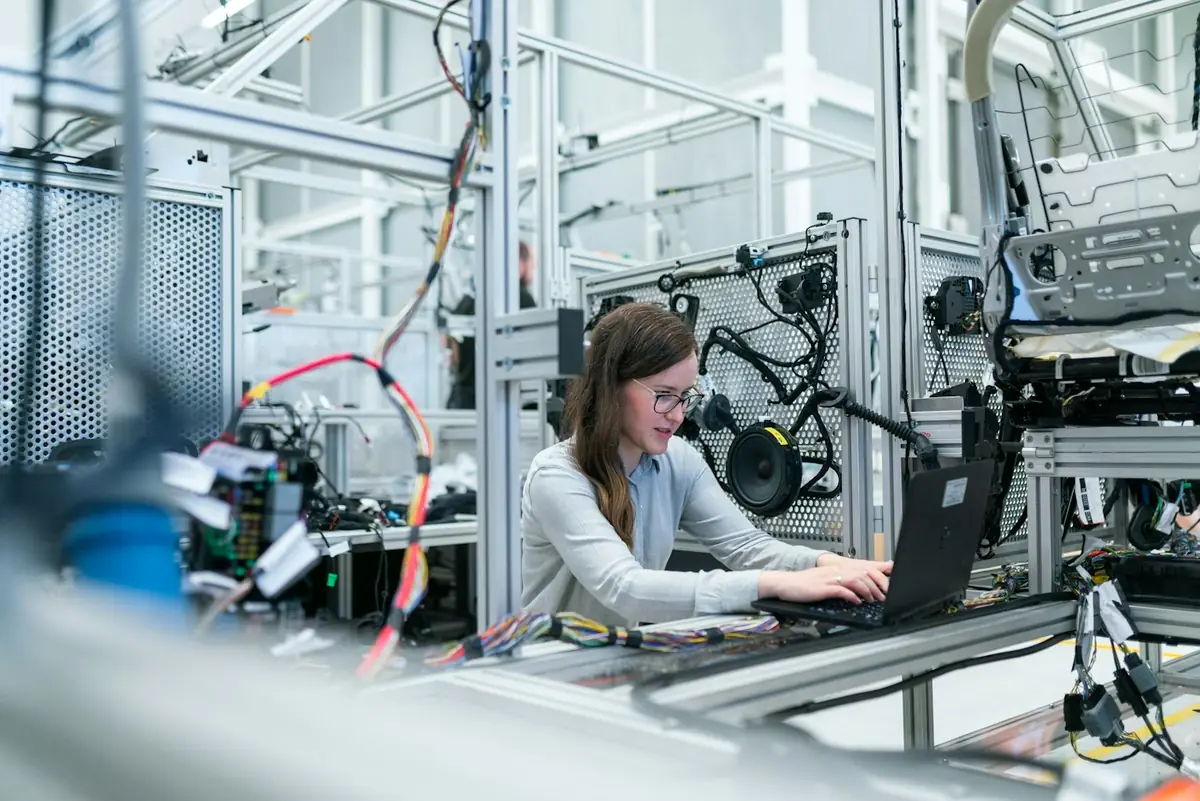
A computer vision system installed at the quality control station of a metal parts manufacturer catches surface defects at line speed.
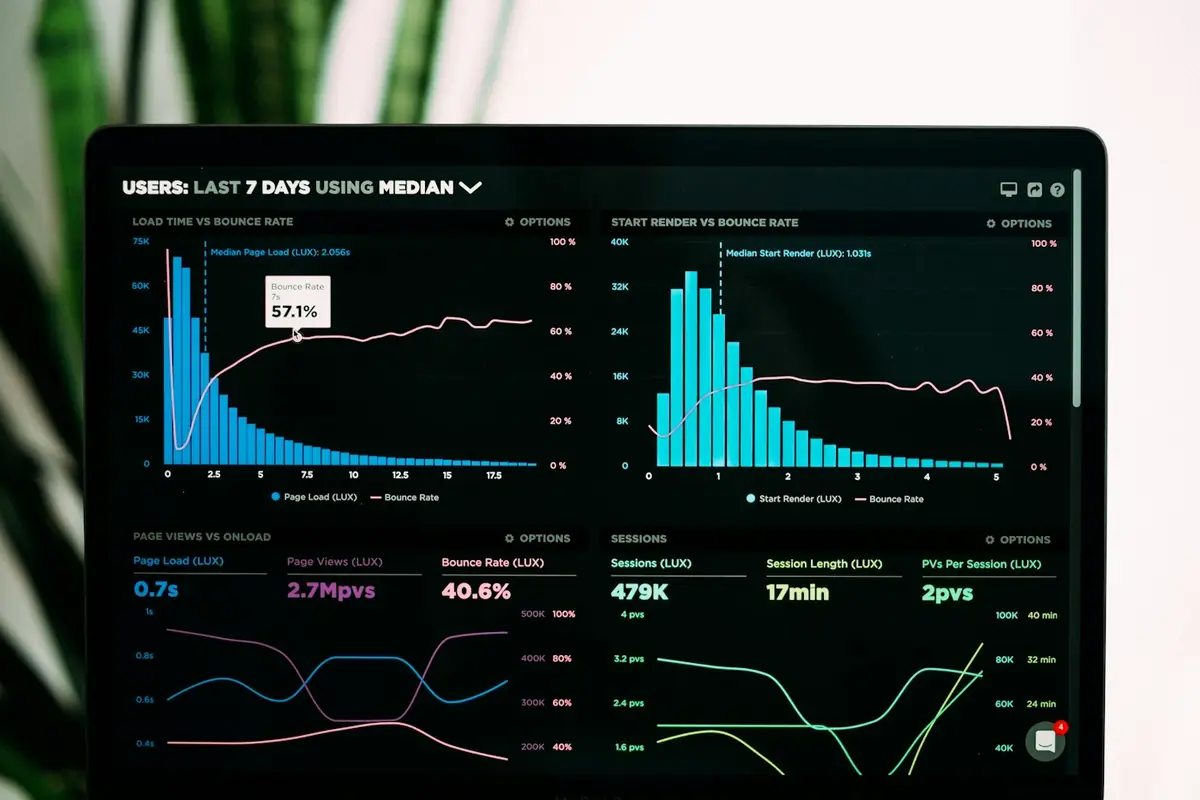
−%38 Defective parts reaching shipmentView project AI ApplicationsRetail and distribution · 2025For a multi-warehouse distributor we developed a model that produces weekly demand forecasts from sales history and suggests orders.
−%27 Number of stockoutsView project VR / AR ApplicationsIndustry and training · 2026A virtual reality training simulation that lets trainees safely experience hazardous work environments and measures training performance.
+%40 Knowledge retention (example)View projectFAQ
The amount of data needed depends on the problem. In the first meeting we review the available data and clarify together the project's feasibility and which data needs to be collected.
Yes. We integrate the models we develop into your ERP, web and mobile applications via API.
Yes. In line with the scientific method, we recommend starting with a small-scope prototype and measurement, then scaling based on the results.
It depends on the scope. Discovery and prototyping usually take a few weeks; go-live and integration may take a few more weeks to months. We give a firm schedule after assessing the data.
Data security is set according to your needs; the model can run on your own infrastructure or in a controlled cloud environment. Confidentiality terms are clarified in the contract.
General-purpose services are sufficient for many tasks. If you have organization-specific data, confidentiality or accuracy requirements, a custom model or customization is the better choice; we evaluate both together in terms of cost and benefit.
Artificial intelligence is a broad field that aims to enable machines to perform tasks requiring intelligence. Machine learning, within this field, refers to models that learn from data instead of having rules written by hand. Most enterprise projects rely on machine learning methods such as classification, prediction and anomaly detection.
Success is measured by business indicators defined before the project starts, such as a reduction in error rate, time saved, forecast accuracy or cost reduction. Model performance (accuracy, precision, recall) and business impact are reported separately, so technical success isn't confused with real benefit.
Model performance can drop as the data distribution changes. That's why models in production are monitored, alerts are raised when performance drops, and they are retrained with new data when needed. The maintenance and retraining plan is shared in writing with the project delivery.
Yes. We develop solutions such as assistants that answer from your corporate knowledge base, document summarization and content classification. The most critical issues here are data confidentiality, grounding answers in sources and keeping incorrect answers under control. We clarify these at the start of the design.
A department lead who knows the business problem and a technical person who can provide access to the data are enough. We handle the data science and engineering. Decision makers attending interim demos is the most important factor in making sure the model fits the real need.
In projects involving personal data, we design KVKK compliance, data minimization and access authorization from the start. In decision support systems, we take care to make what the model bases its results on explainable. Critical decisions that require human approval are not left to automation.
We develop applications such as quality control, demand forecasting, document processing and customer analytics in fields like manufacturing, retail, logistics, services and the public sector. Since each industry's data and risks are different, we design the solution based on analysis results, not a ready-made package.
Explore
Original R&D projects built with scientific method; from academic knowledge to technology products.
Explore AutomationWe turn repetitive work into smart workflows for greater efficiency and speed.
Explore ERPScalable enterprise resource planning software that fits your processes exactly.
ExploreHow can we help you?
Software SupportExisting software and technical support Project SupportNew projects, quotes and consultingWe reply quickly on business days.
 AI Applications
 AI Applications
 VR / AR Applications